LEADERSHIP & PRODUCT DESIGN·MOLOCO
Built a design function that earned its seat at the table.
TL;DR
I joined Moloco as the first design leader. There was a nascent design function, but no real team, no process, and no shared understanding of what design could do beyond execution. I built everything from scratch — the team, the practice, the culture — and over two years, elevated design into a strategic partner in product development. By the time I left, leadership was coming to design for their highest-priority projects.
REVENUE
$300M+
Owned design for Moloco's core Ads platform.
GROWTH
$40M+
Sponsored two 0→1 product launches within 12 months.
EFFICIENCY
2x faster
Internal tools my team built cut support resolution time in half.
The invisible work that makes everything else possible.
Moloco was an ML-first company growing fast — 8x revenue growth in three years — with brilliant engineers and data scientists, but no shared language for talking about users. The opportunity was huge, and so was the gap.
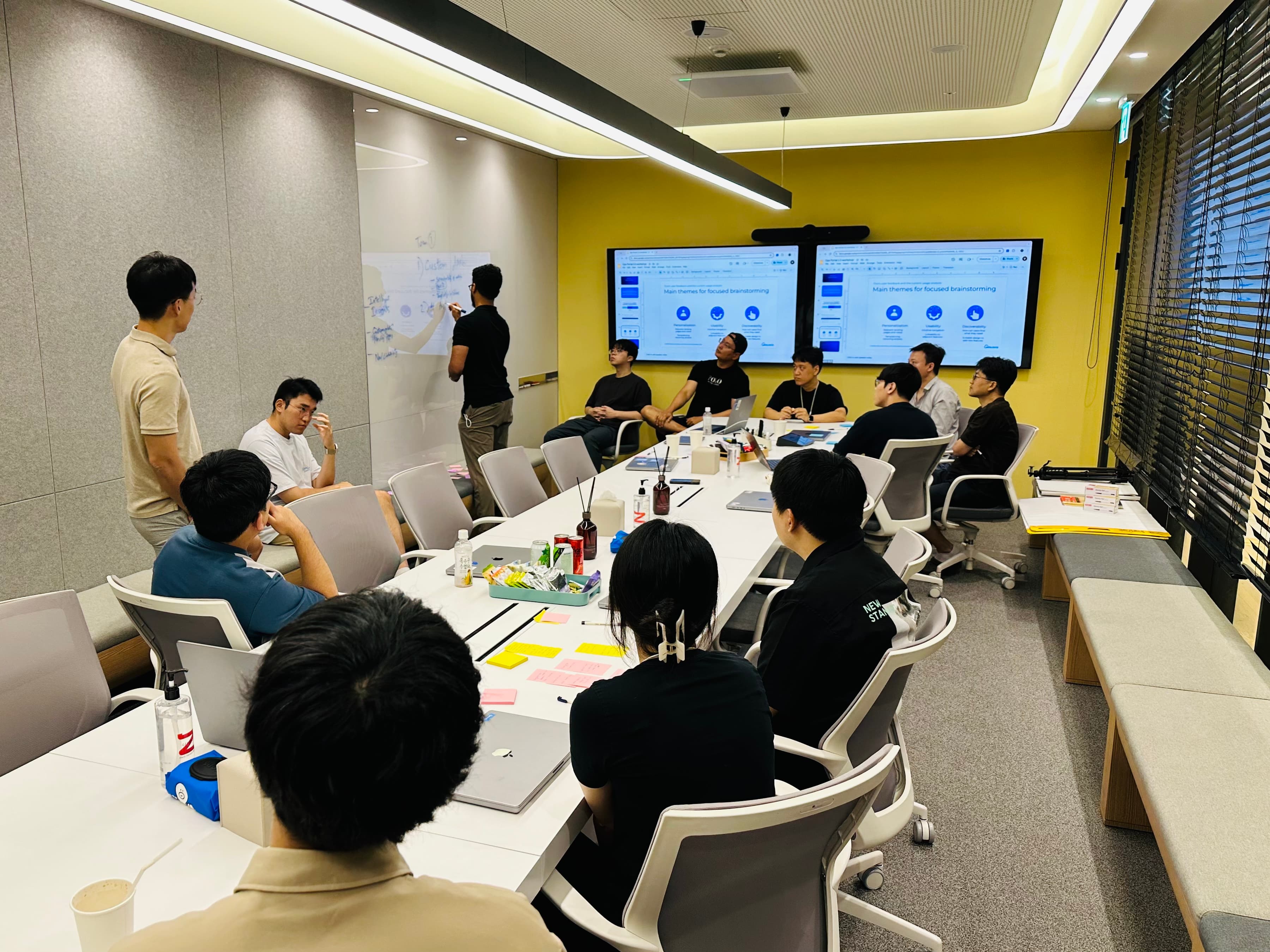
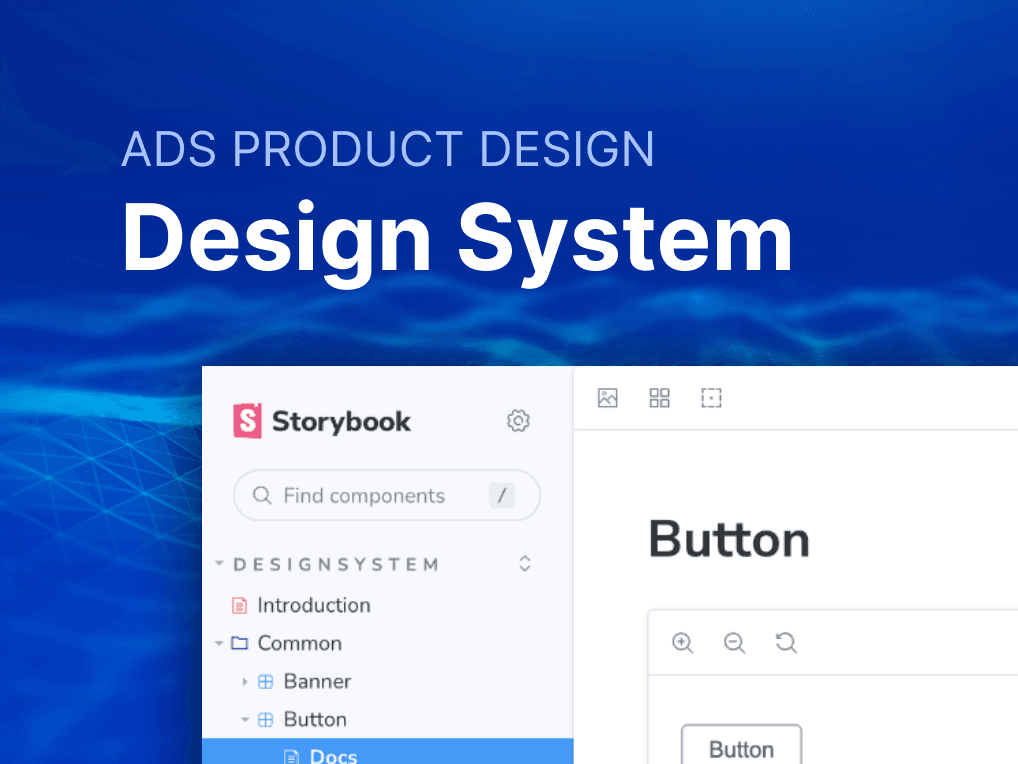
I hired a team of three direct reports and built the foundations: career ladders, hiring rubrics, critiques, retros, product and design reviews. I introduced and governed a fully adopted design system, working with engineers to build it on Storybook—shipping features went from weeks to days. I also started a bimonthly design newsletter that became one of the most well-loved internal communications at the company with the highest open rate of >70%.
Leadership had competing priorities. So we found another way in.
Moloco's account managers across regions were using different tools to monitor ad campaign performance—spreadsheets, Looker, various business intelligence (BI) platforms—and none of them gave the full picture. My product manager and I proposed consolidating everything into a single internal report, but leadership wasn't ready to commit.
Then a company hackathon came up, and we decided to use it. We rapidly prototyped in Figma with near-real data, brought account managers in to give us feedback, iterated, and pitched it during the hackathon with their testimonials backing us up.
The Chief Machine Learning Officer and Chief of Staff to the CEO loved it—they even created a new hackathon award category for our project. We had buy-in.
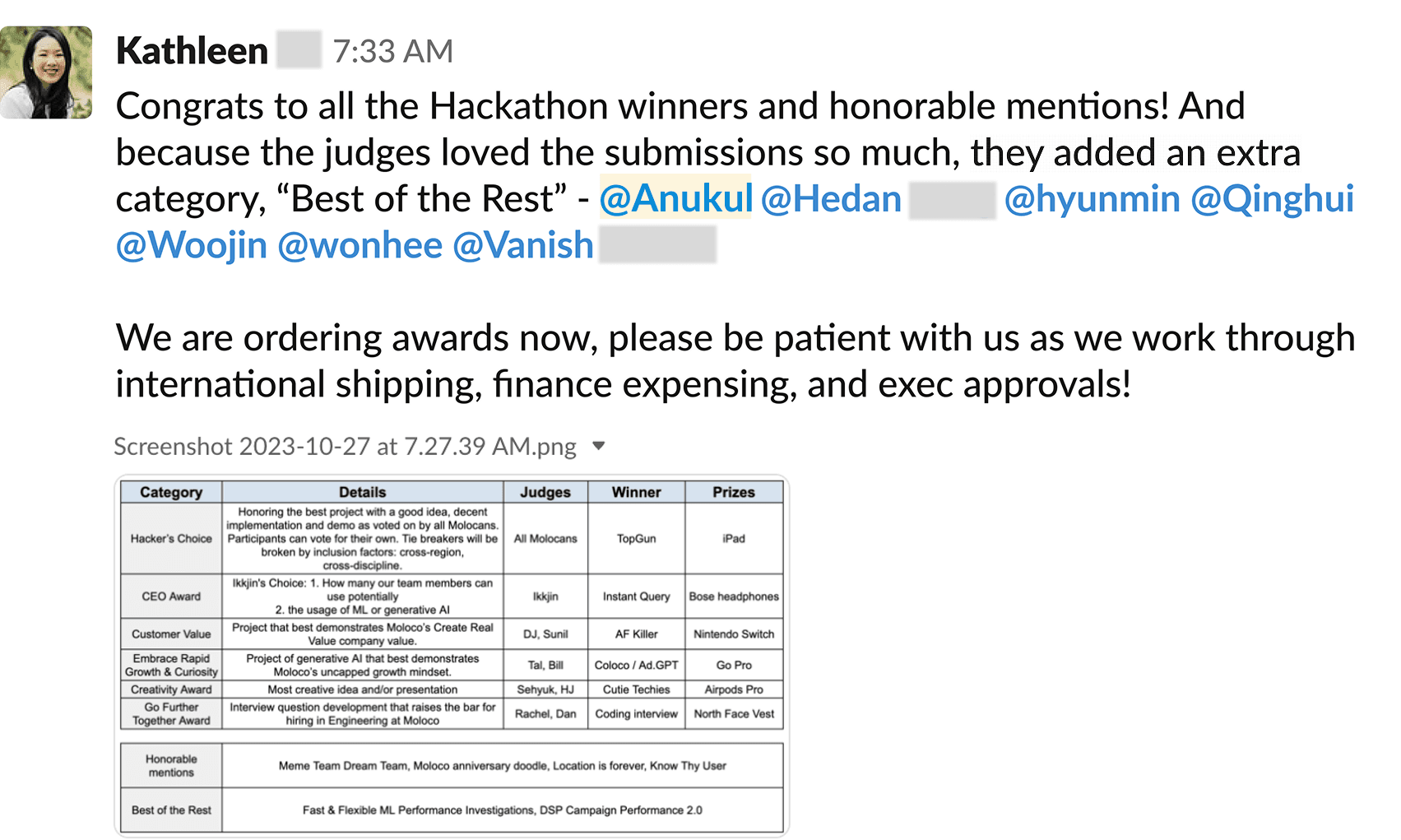
The projects where leadership really bought into design.
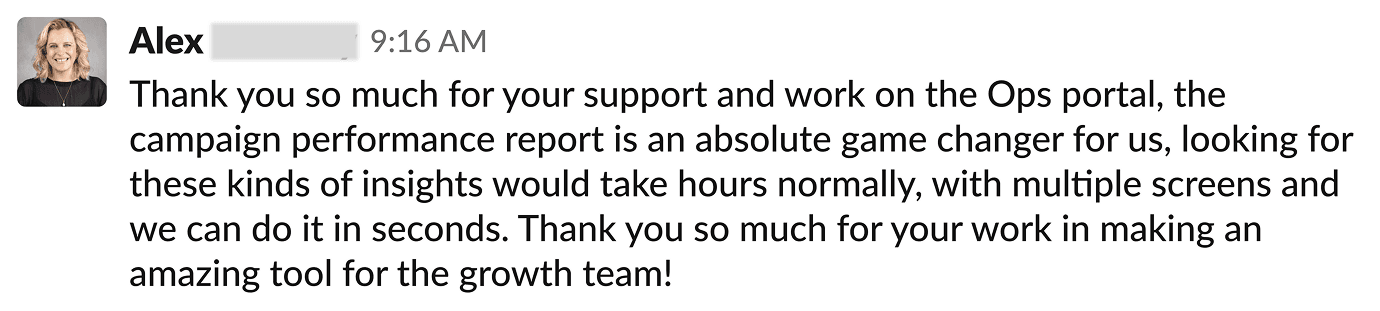
The Campaign Performance Report replaced the patchwork of spreadsheets, Looker dashboards, and BI tools across regions with a single view. Within weeks, 47% of the global sales team had fully transitioned — no mandated rollout, just word of mouth.
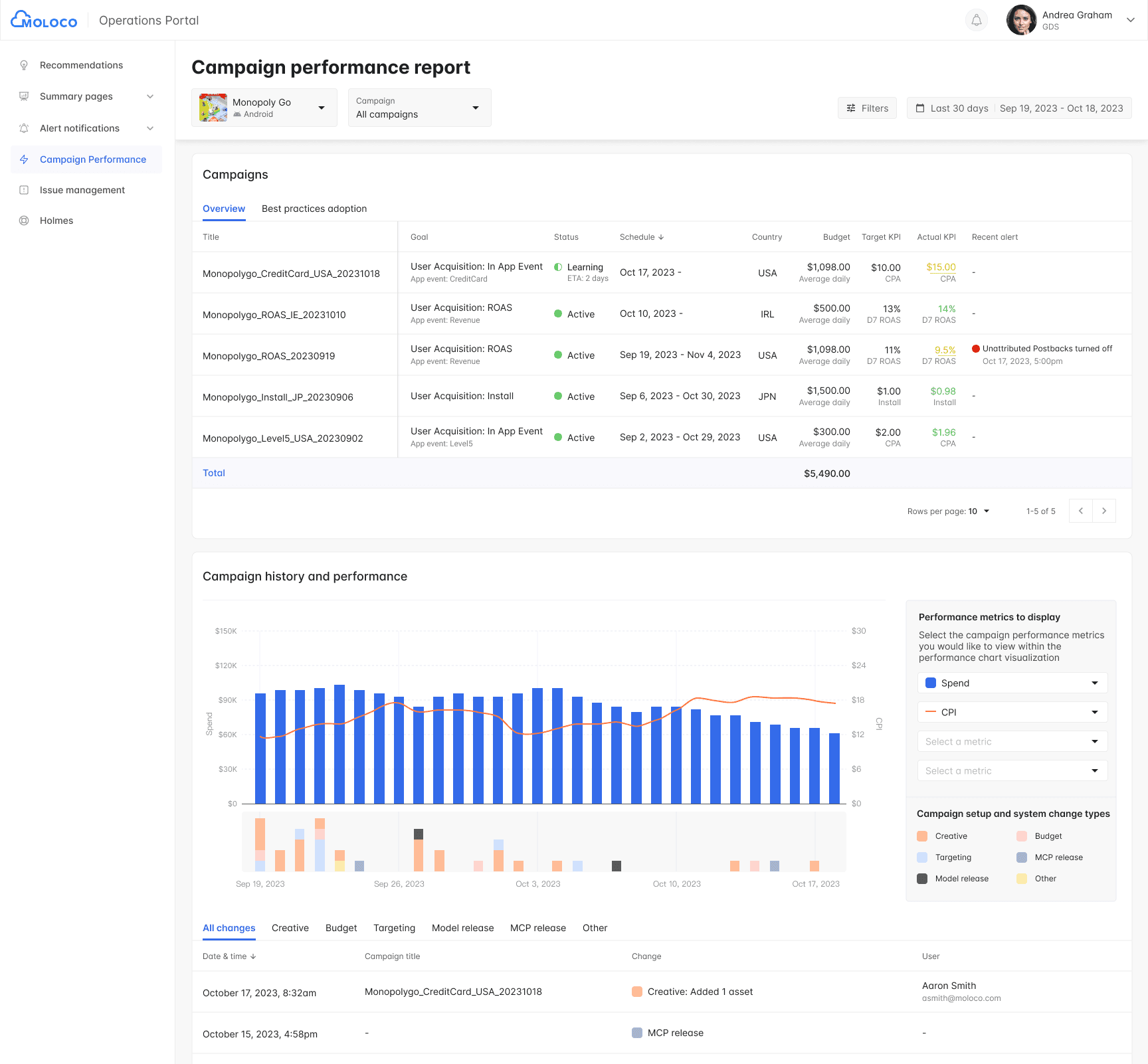
Campaign performance report
Smart recommendations — Personalized recommendations to help account managers hit campaign KPIs
Visual change history — See exactly which factors are driving shifts in campaign performance

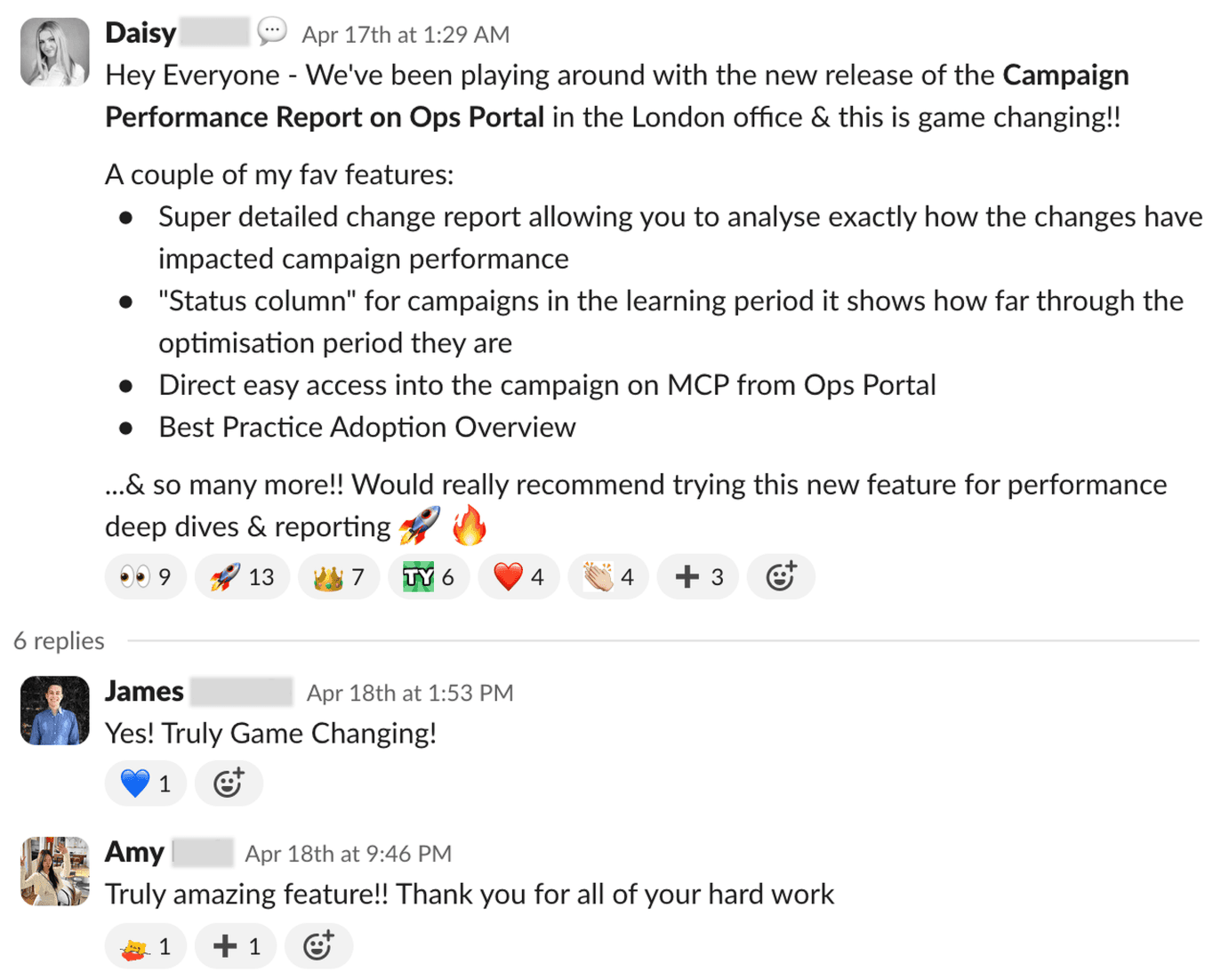
Next, the CTO brought us in to build Advanced Campaign Health Check which went deeper—helping execs, data scientists, and account managers figure out why campaigns were underperforming. We talked to employees who had joined from Google, TikTok, and Meta about how they'd approached diagnostics at scale. It became Moloco's top product priority.
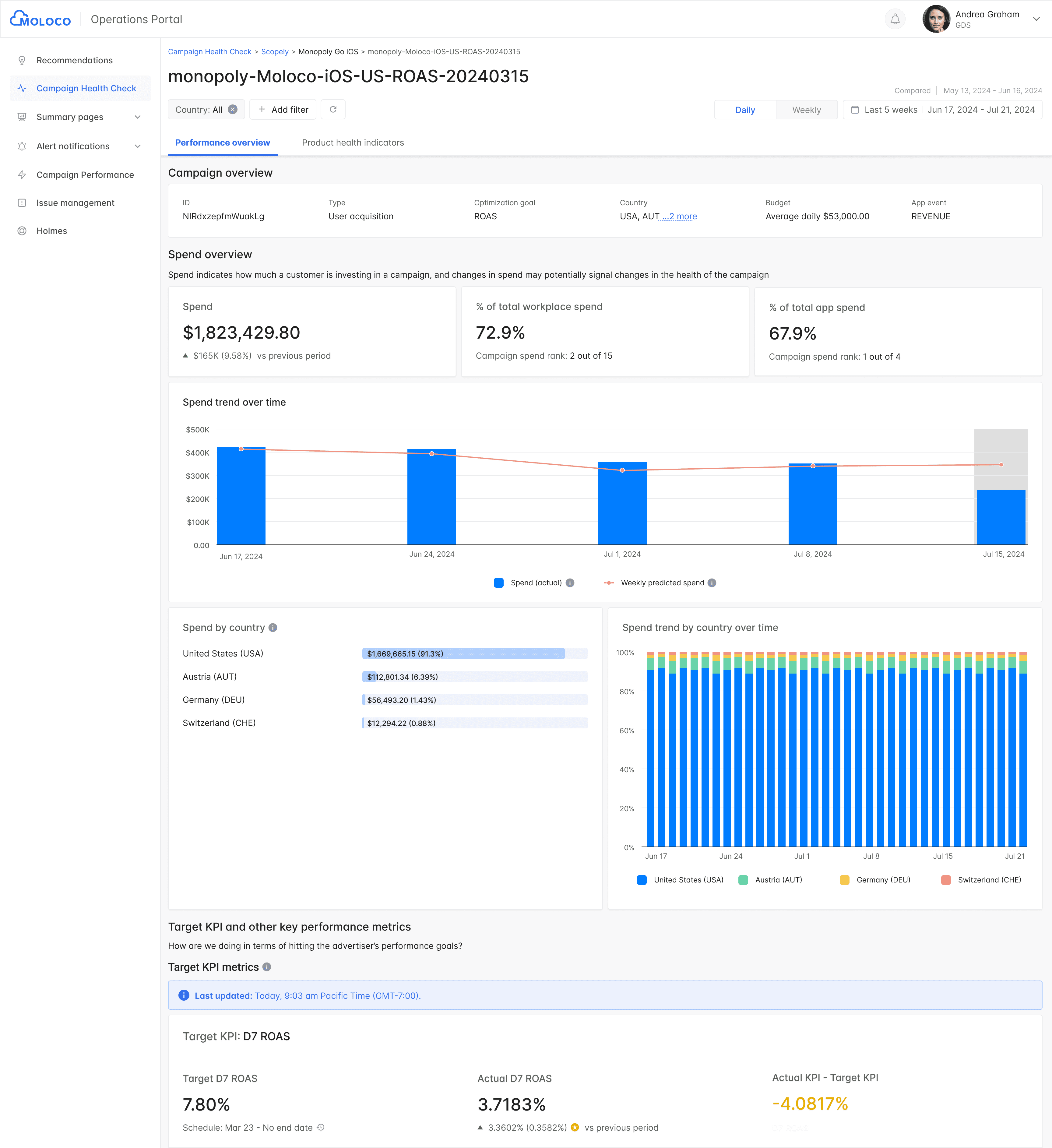
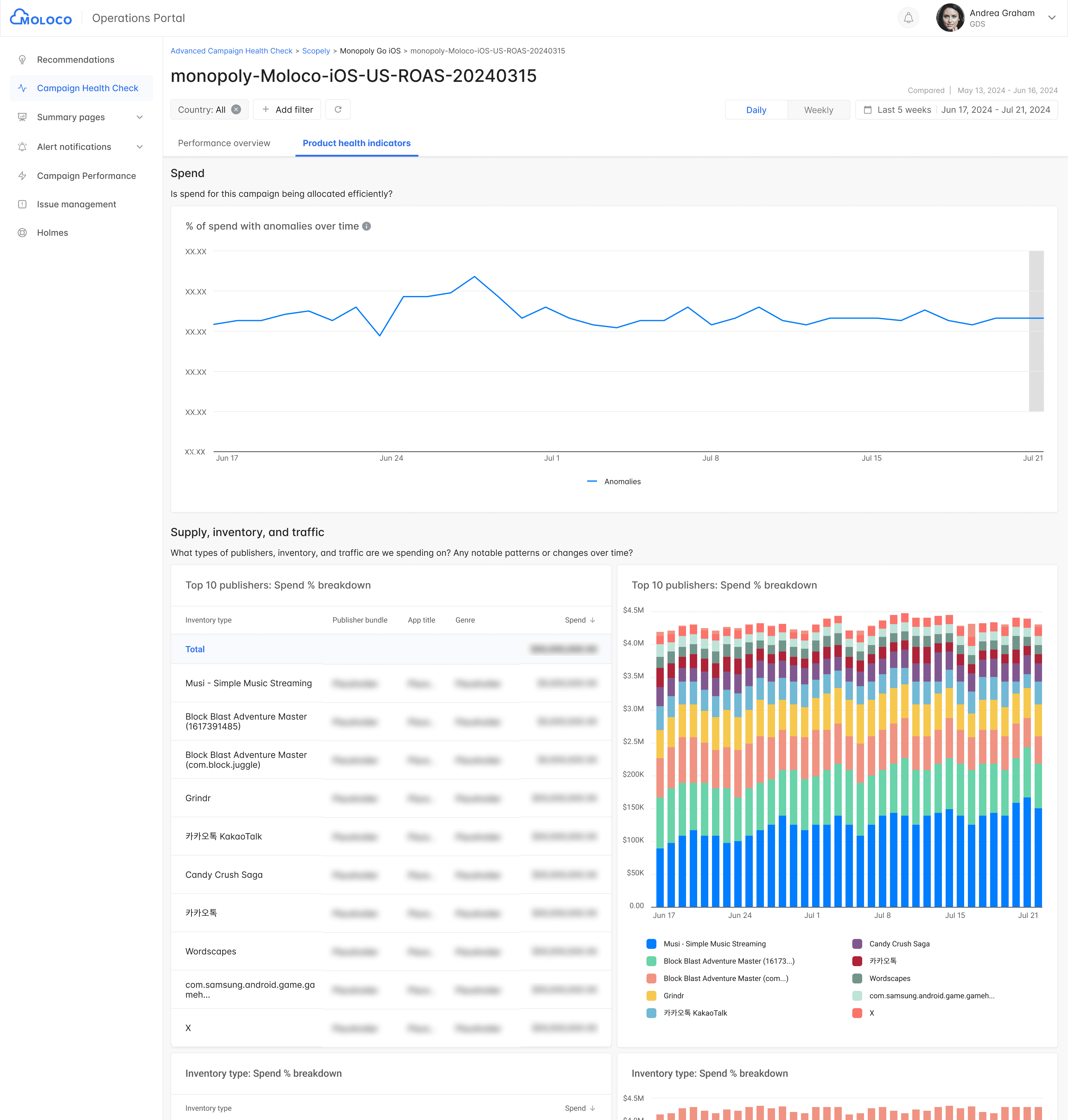
This is great! Better than anything we had at Google.
Camille W, Sr. Dir. of Machine Learning
The real outcome isn't a tool. It's a shift.
When I joined, design was an execution function — called in to make things look right after decisions had already been made. When I left, leadership was sponsoring high-priority projects and asking design to shape them from the start.
I sponsored two 0→1 launches that drove $40M in additional ARR within 12 months. That kind of trust doesn't happen overnight — it came from showing up consistently, building a team that delivered, and proving that design could move the needle.